
Updated 2026-11-26 · Seattle Rodent Control
Most rodent problems are a nuisance rather than an emergency, but mice and rats do carry real health risks. Most come from contact with urine, droppings and nesting material rather than bites.
Diseases linked to rodents
- Leptospirosis is a bacterial infection spread through water or soil contaminated with rodent urine. It is more common after flooding and heavy rain, which can matter after storms in low-lying areas.
- Salmonellosis comes from food or surfaces contaminated by droppings.
- Hantavirus is spread mainly by deer mice and rare in Washington, but serious. It is caught by breathing in dust from contaminated droppings and nests, which is why you should never sweep or vacuum them dry.
- Lymphocytic choriomeningitis (LCMV) is carried by house mice.
- Rat-bite fever comes from bites or scratches.
Rodents also bring in fleas, mites and ticks, and mouse allergens are a known trigger for asthma, especially in children.
Seasonal patterns in Seattle
Seattle has a mild, wet marine climate: cool, rainy falls and winters, dry summers and few hard freezes. Rodents move indoors from late September through winter, so indoor exposure peaks then. Long stretches of fall and winter rain that soak hillsides and swell creeks and ravines can push rats out of burrows and spread contaminated water. Summer heat increases odor problems when a rodent dies inside a wall.
Fire and property risk
Rodents chew wiring insulation. Exposed conductors in attics and walls can short and start fires, and chewed wiring is often found in attics with long-term mouse activity. If you see damaged wiring, have an electrician check it.
How to clean up droppings safely (small areas)
- Ventilate the area for 30 minutes before you start.
- Wear rubber or nitrile gloves; for larger messes, add a well-fitted N95 or better mask.
- Spray droppings, urine and nesting material with a disinfectant or a fresh bleach solution (1 part bleach to 10 parts water) and let it soak for 5 minutes.
- Wipe up with paper towels and seal everything in a plastic bag.
- Disinfect the surface again, then wash gloved hands, remove the gloves and wash your hands.
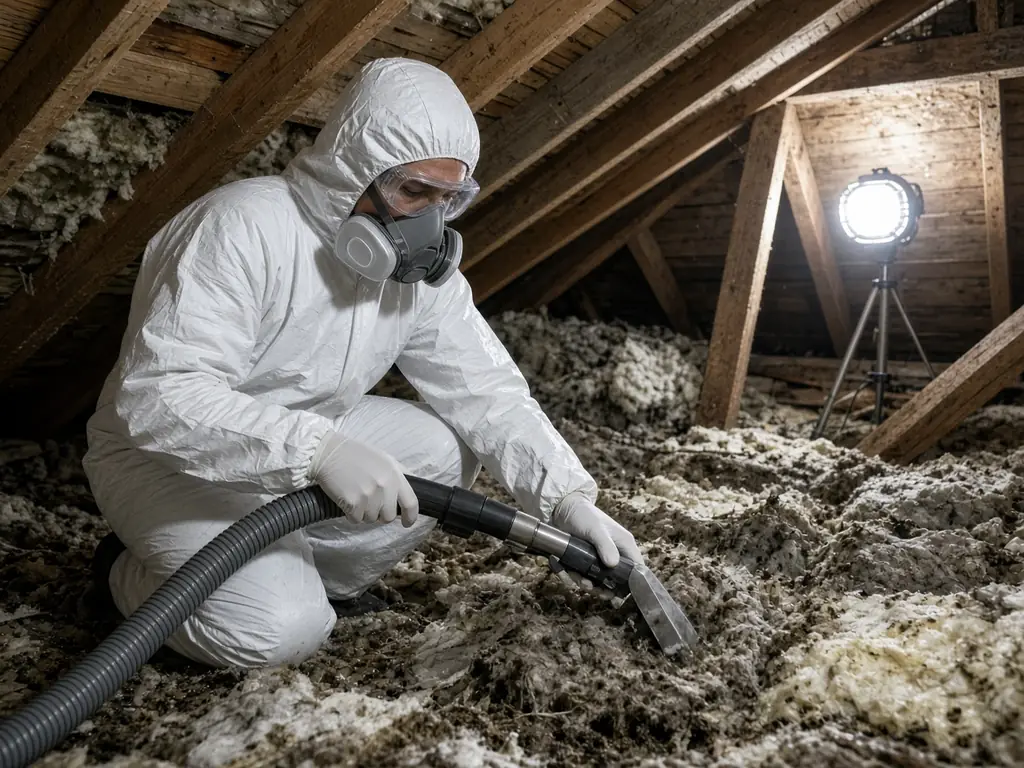
Never sweep or vacuum dry droppings with a household vacuum. Large contaminated areas such as attics, crawlspaces and storage rooms are better handled by a professional attic cleanup crew with HEPA equipment and protective gear.
If you develop fever, muscle aches or breathing problems after cleaning up after rodents, tell your doctor about the exposure.
Get a free rodent inspection
Tell us what you are seeing and where. We will book a free inspection with a licensed local technician.
Call (564) 220-4806