
Lake Stickney at a glance
| Location | 19.0 miles north of downtown Seattle |
|---|---|
| County / jurisdiction | Snohomish County, Washington |
| Population | about 15,514 (ACS 2020-24 estimate) |
| Typical home built | 2000 (median year built) |
| Housing mix | 40% single-family detached, 4% in 2-4 unit buildings, 41% in larger buildings |
| Owner-occupied homes | 52% |
| Nearby creeks & rivers | Lake Stickney (runs through the area), Swamp Creek (0.3 mi), North Creek (1.2 mi) |
| Parks & green space nearby | Stickney Lake Public Access, Lake Stickney Park, Martha Lake Airport Park |
| Nearest highways | I-5 (0.4 mi), SR 99 (0.7 mi) |
| ZIP codes | 98087, 98204, 98037, 98012 |
How attic rodent cleanup works
- Confirm the animals are gone. Cleanup comes after removal and sealing; otherwise the attic gets re-contaminated.
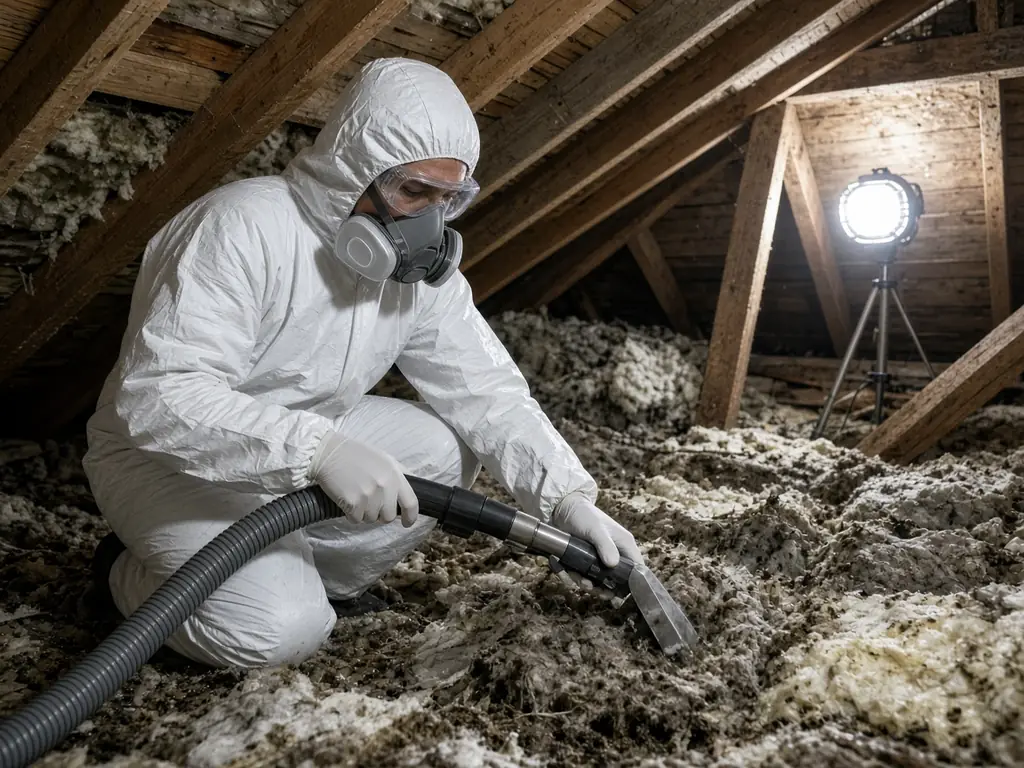
- Contain and protect. Workers wear respirators and protective suits. The attic hatch and living space are protected so dust does not travel downstairs.
- Remove and sanitize. Droppings, nests and soiled insulation are vacuumed out with HEPA equipment and bagged. Surfaces are treated with a disinfectant and deodorizer used per label.
- Restore. New insulation is installed to the right depth, and damaged wiring or ductwork is flagged for repair.
Why attic contamination show up in Lake Stickney
Much of the housing here was built after 2000. Newer homes are tighter, but brick weep gaps, utility penetrations and roof returns still let mice in, especially next to fields and new development.
Most attics here have blown-in insulation that mice tunnel through easily; urine-soaked, compressed patches are the main thing that needs to come out.
Mature trees around Stickney Lake Public Access and nearby streets also bring squirrels to rooflines, and squirrel-damaged attics need the same cleanup.
Signs to look for
- Flattened, tunneled or stained insulation
- Droppings concentrated along attic walls and around the hatch
- A persistent ammonia or musky smell upstairs
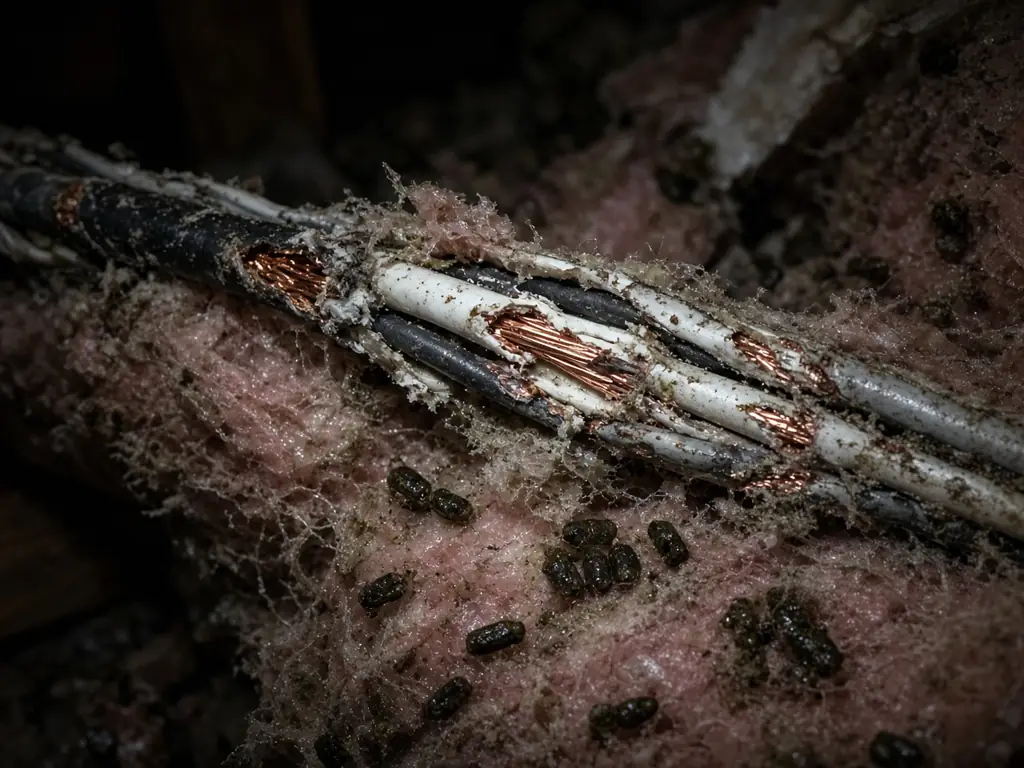
- Chewed wiring insulation or duct wrap
Attic Rodent Cleanup cost in Lake Stickney
Prices in Lake Stickney follow the wider Seattle market. The main factors are the size of the home, how established the activity is and how many entry points need sealing.
| Item | Typical Seattle-area range |
|---|---|
| Attic assessment | Free with service |
| Spot cleanup & sanitizing | $400 – $1,200 |
| Full insulation removal & replacement | $1,500 – $6,000+ (size dependent) |
| Odor treatment / deodorizing | often included |
Ranges reflect typical prices in the Seattle market. They are a guide, not a quote; your price depends on the inspection.
See the full Seattle rodent control cost guide
Local resources
For rats on public land, in an alley, on a vacant lot or on a neighbor's property in Lake Stickney, contact your city or county health office. Rodents inside your own home or business are the owner's responsibility, and that is where we come in.
Attic Rodent Cleanup near Lake Stickney
- North Lynnwood, WA
- Mill Creek, WA
- Larch Way, WA
- Martha Lake, WA
- Picnic Point, WA
- Meadowdale, WA
- Lynnwood, WA
- Mill Creek East, WA
See also attic rodent cleanup across the Seattle area.
Frequently asked questions
Do I need to replace all the insulation?
Not always. Lightly affected areas can be spot-cleaned. Insulation soaked with urine or full of tunnels should be removed because it no longer insulates well and keeps smelling.
How long does attic cleanup take in Lake Stickney?
Most attics take one to three days depending on size and how much insulation is being replaced.
Will this get rid of the smell?
Removing contaminated material is what removes the smell; deodorizers help with the residue.
Which ZIP codes do you cover in Lake Stickney?
We cover 98087, 98204, 98037, 98012 in and around Lake Stickney, along with nearby North Lynnwood, Mill Creek, Larch Way.
Get a free rodent inspection
Tell us what you are seeing and where. We will book a free inspection with a licensed local technician.
Call (564) 220-4806