
Seattle at a glance
| Location | Central Seattle |
|---|---|
| County / jurisdiction | King County, Washington |
| Population | about 780,995 (2024 Census estimate) |
| Typical home built | 1974 (median year built) |
| Housing mix | 38% single-family detached, 5% in 2-4 unit buildings, 51% in larger buildings |
| Owner-occupied homes | 44% |
| Nearby creeks & rivers | Mahteen Creek (1.4 mi) |
| Parks & green space nearby | Seattle Center, Tilikum Place, Growing Vine Street Headwaters Park |
| Nearest highways | SR 99 (0.3 mi), I-5 (1.1 mi) |
| ZIP codes | 98121, 98109, 98101, 98154 |
Mice & Rats in Seattle: the local picture
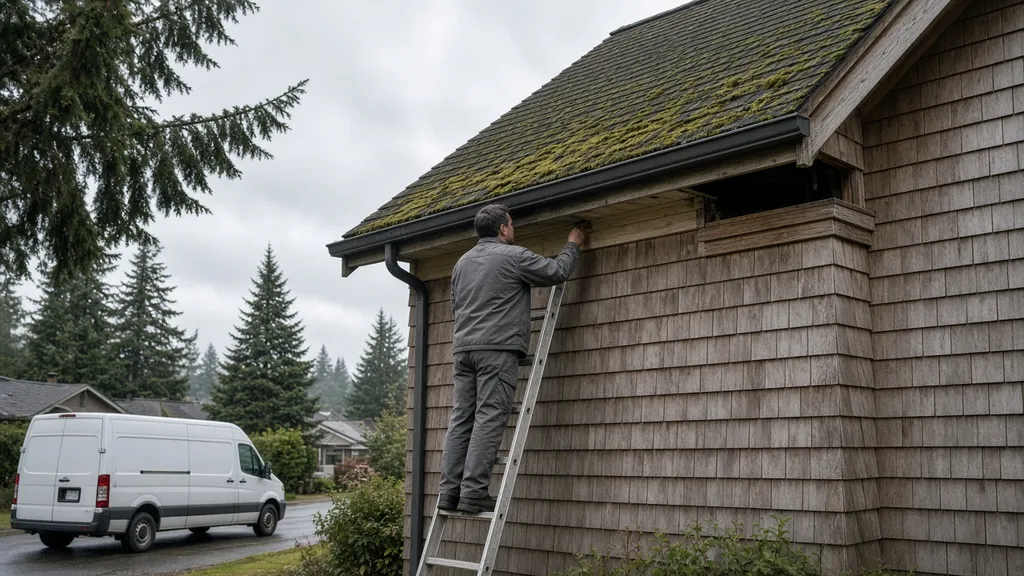
Most homes here were built in the 1960s and 1970s: ranches and split-levels with attached garages, crawlspaces or storage rooms, and soffit and gable vents that are now half a century old.
Mahteen Creek is about 1.4 miles from the center of Seattle. Creek ravines and greenbelts give Norway rats water and soft banks to burrow in, and blackberry and ivy cover lets roof rats move along fences into yards, sheds and garages.
About 56% of homes in Seattle are in multi-unit buildings. Shared walls, basements and trash areas mean one building's problem quickly becomes the neighbors'.
Alleys with shared trash carts and detached garages are typical here, and they are the main rat highways in the city.
Green space such as Seattle Center and Tilikum Place supports field and house mice through the summer; when nights cool in the fall, homes along the edges see the first wave indoors.
Signs to look for
- Chewed food packaging, insulation or wiring
- Greasy rub marks along walls and joists
- Nesting material made of shredded paper, fabric or insulation
- Pets suddenly fixated on one wall or appliance
What happens when you call
- Inspection. A technician checks the foundation line, garage, utility penetrations, roofline, attic and basement or crawlspace, confirms whether you have mice, rats or both, and maps where they are getting in.
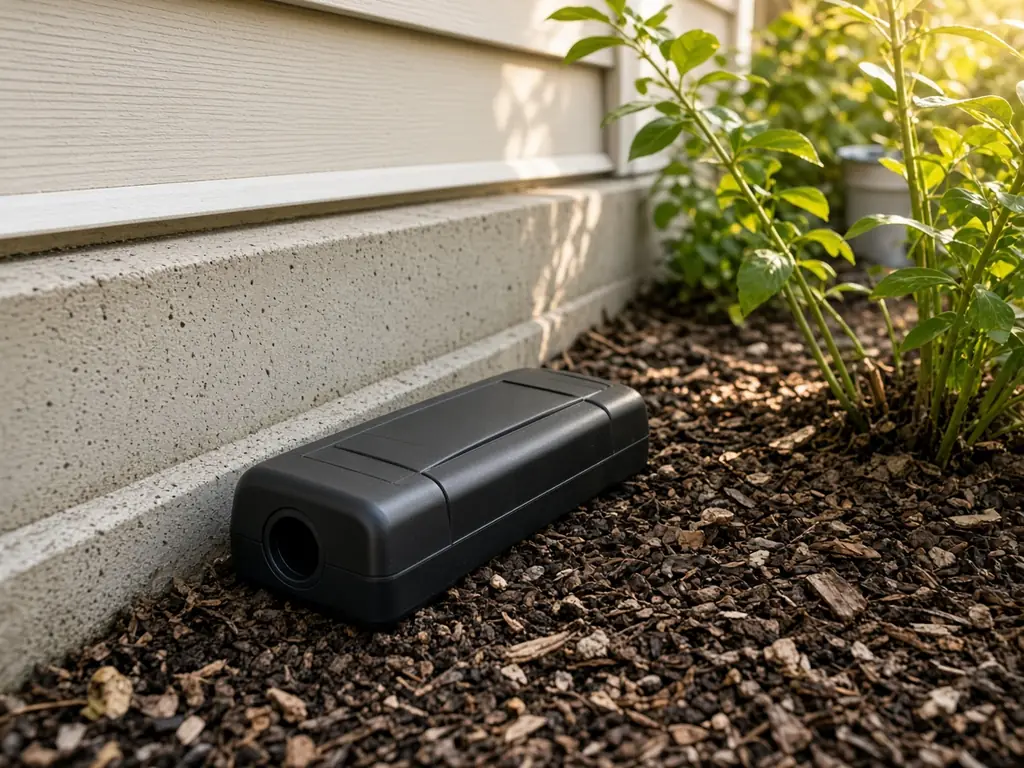
- Knock-down. Traps go where activity is heaviest indoors. Tamper-resistant bait stations are used outside only where they make sense around kids and pets.
- Seal the gaps. Openings bigger than about 1/4 inch get closed with materials rodents cannot chew through: copper or steel mesh, sealant, hardware cloth, door sweeps and vent screens.
- Follow-up. Return visits remove catches, reset devices and confirm activity has stopped. You get a short list of what to change around the property to keep it that way.
Rodent Control cost in Seattle
What you pay in Seattle depends mostly on how long the problem has been going on, the size and age of the building, and how much sealing it needs.
| Item | Typical Seattle-area range |
|---|---|
| Inspection & written findings | Free with service |
| Initial rodent service (trapping/baiting + follow-up) | $150 – $450 |
| Exterior bait-station monitoring | about $18 – $60 / month |
| Entry-point sealing (exclusion) | $300 – $1,500+ |
Ranges reflect typical prices in the Seattle market. They are a guide, not a quote; your price depends on the inspection.
See the full Seattle rodent control cost guide
Local resources
For rats on public land, in an alley, on a vacant lot or on a neighbor's property in Seattle, contact Public Health - Seattle & King County or your city code enforcement office. Rodents inside your own home or business are the owner's responsibility, and that is where we come in.
Rodent Control near Seattle
- Medina, WA
- Hunts Point, WA
- Clyde Hill, WA
- Yarrow Point, WA
- Mercer Island, WA
- Beaux Arts Village, WA
- Bainbridge Island, WA
- Boulevard Park, WA
See also rodent control across the Seattle area.
Frequently asked questions
Do I have mice or rats?
Mouse droppings are about the size of a grain of rice with pointed ends; Norway rat droppings are closer to 1/2 to 3/4 inch with blunt ends. Rats also leave burrows along foundations and fences. A technician confirms this at the inspection.
Is the treatment safe for kids and pets?
Indoor work relies mainly on traps placed out of reach. Any bait is kept in locked, tamper-resistant stations outside, placed according to the label. Tell the technician about pets so placements can be adjusted.
Will the rodents come back?
They come back when the openings stay open. That is why sealing entry points is part of the job, not an optional extra.
Which ZIP codes do you cover in Seattle?
We cover 98121, 98109, 98101, 98154 in and around Seattle, along with nearby Medina, Hunts Point, Clyde Hill.
Get a free rodent inspection
Tell us what you are seeing and where. We will book a free inspection with a licensed local technician.
Call (564) 220-4806